
Section 4 - What's Gone Wrong
The exploitation of toy breeds has led to some notorious behavior problems.

What Went Wrong
Toy breeds have stood the test of time better than their noble human counterparts. But when we compare our idyllic picture of King Henry III and the ladies at court carrying sweet, beloved dogs to toy breeds today, it certainly would lead one to have some questions.
Toy breeds are both beloved and infamous. Thoughts like "Napoleon complex," "ankle biter," "yappy," "house training issues," and "breathing problems" often come to mind when we think of them. So, what went wrong? How did toy breeds become both problematic and wildly popular at the same time?
Toy breeds were selected for their good nature, human adoration, and adorable features. And much of that still shines through today. But a few things have happened on the road to the 21st century that have not been in our sweet toy breeds favor.
Genetic Bottlenecks
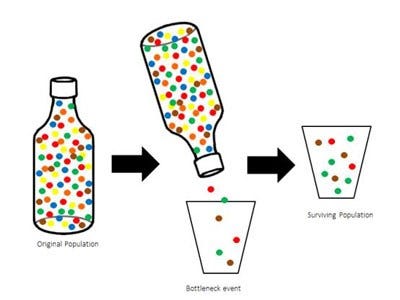
A genetic "bottleneck" occurs when an event significantly reduces how many members of a species' reproduce. Since only a small number reproduce a much smaller gene pool is passed onto future generations.
Toy breeds have experienced several such bottlenecks, leaving them with a limited and often closely related gene pool.
The advent of “breeds”
One “bottleneck” happened in the Victorian era when the concept of Kennel Clubs and “breeds” was invented. As mentioned previously, before kennel clubs, dogs were bred for traits that helped humans in some way. The characteristics were recognizable but it was more akin to a color spectrum. The colors are distinct but they blur and blend together. So was the case with dog types.
Unfortunately for dogs, Victorians saw them as a path to social differentiation, status, and money. To achieve this, one needed distinct and recognizable characteristics. A “breed” wasn’t enough. The concept of a “purebred” dog evolved to make one’s dog more elite than someone else's “mutt”.
To be easily recognizable as “purebreds”, visual standardization was necessary. If you had a Labrador with white spots on her chest she may be mistaken for a “mutt” and you might be mistaken for poor.
Not unrelated, as dog show competitions emerged to determine the “best” dogs, they were met with significant challenges especially in terms of judging. Favoritism and bias were frustrating to the competitors. In fact, frequently the organizers WERE the judges and gave themselves all the prizes creating value in their own breeding stock.
So, over a decade, increasingly specific physical standards emerged for each breed to try to eliminate bias and foul play in judging. This created the incredibly specific breed standards we know today.
So, how does one breed to that kind of standardization? Well, think about it. If you had a biological baby on the way, you would probably wonder what it would look like? What traits would they get from you? From the other biological parent? Once the baby was born, you would likely study them to see who they look like and what they “got” from each “side”.
Now, if you and your full genetic sibling made a baby, you would have a pretty good guess what the baby would look like. That’s right. They created standardization and predictability the only way you can. Incest. (This was controversial even at the time. But it prevailed amidst vocal objections from some in the Victorian dog community.) That’s what “pure” blood is. Related blood.
The more branches you cut off the family tree the fewer genes and hence possible combinations and outcomes are possible. So you can achieve a predictable, standard look. This financially boded well for the few who owned the “right” dogs to propagate the species going forward.
So, the mentality of breeding the “best of the best” became ingrained into the culture and was financially advantageous to a few and helped brand purebred dogs as something better than “mutts” or “mongrels”. Unfortunately, breeding only a select percent of a population and focusing on line breeding and inbreeding also drains a species gene pool.
Sadly, most of the genes are now lost forever. This means purebred (and domestic dogs in general) have a very low “genetic diversity”. There just aren’t a lot of genes to work with so health issues are hard to escape. (There is a reason incest is a social taboo in pretty much every human culture. It causes health and development problems.)
Worshiping at the purebred altar is on the decline. But the genetic diversity we once had is gone forever.
Revolting against nobility
Genetic bottlenecks from standardization were a blow to begin with. But the hits just kept on coming for our sweet toy breeds. In addition to breed standards wiping out much of the gene pool, the peasants also decided they’d had enough of the nobility’s crap.
Revolutions raged across the globe. And a common strategy was to kill the nobility’s beloved toy breeds. They represented all that the revolutionaries had been oppressed by and hence (understandably) hated. And it could bring emotional devastation to their oppressors. Many breeds of toy dogs lost a significant amount of their population causing yet another bottleneck of the few remaining genes.
Breeding to Deficits
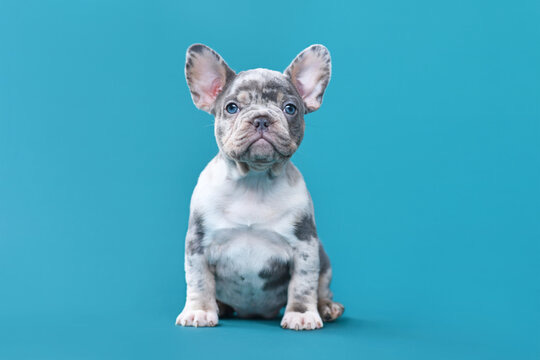
In addition to the “bottleneck” standardization caused, breeding towards a standard also included breeding to deficits. Flatter faces, rounder heads, longer ears, and increasingly angulated hips are common examples. Adorable or stunning as these may be, they stray from the “dog template” and these deficits can cause painful conditions such as breathing impairment (imagine if you were intentionally bred to be congested your whole life), ear infections, and a painful condition called hip dysplasia.
So unfortunately the advent of breed standards, let alone unhealthy ones, did dogs, toy breeds included, no favors.
Mass Producing Dogs
Unfortunately toy breeds got kicked when they were down with a depleted gene pool and breeding towards painful deficits with the genes that were left.
The next blow happened after World War II when the US started mass producing dogs. Large volume kennels sometimes referred to as “Puppy Mills” began to take root.
Today “puppy mills” (or commercial breeders as they prefer to be called) account for a large percentage of the toy breed population. There are conservatively 79 million pet dogs in America. There is not reliable data on what percent come from which source (rescue, hobby breeder or commercial breeder). But it is safe to say commercial breeders are accounting for MILLIONS of puppies.
Commercial kennels breed any breed or mix you can imagine. But they are notorious for breeding toy breeds. Toy breeds take less food and less square footage so it enables higher kennel volumes. They are helpless, forgiving to a fault, and always in demand. So toy breeds lend themselves extremely well to predatorial breeding practices.
Some commercial breeders care very much about creating healthy animals with sound temperaments. But many do not, and even under the best of circumstances they, by definition, cannot give the personalized attention and socialization necessary to give toy breeds a solid start on potty training and maximizing the temperament genes the dog got genetically.
So many toy breeds lack the needed early socialization due to the kennel environment they live in during the critical neonatal period.
And of course the parent dogs living in the commercial kennels don’t produce puppies forever. When they are no longer producing they get sold or released to rescue. Because they have lived in the kennel environment for so long their brains often have not developed correctly. Sometimes compensatory work can be done and sometimes it can’t. So we see a lot of shy fearful toy breeds that were breeder releases from commercial kennels.
Misunderstanding
Bottlenecks, deficits, and commercial breeding oh my. If you think that is the end of the toy breed problems, you are unfortunately mistaken.
On top of it all, toy breeds are not well understood by our human population today. They are different, but the same rules and logic that is applied to other dogs gets applied to them. This can cause extreme stress and anxiety. It is useful to think of toy breeds being a different “neurotype” than other dogs. A neurotype is a type of brain. For instance autism and ADHD are neurotypes most people are aware of. And parents with ADHD or autistic children quickly learn their brains work differently and you have to parent differently. Conventional approaches and logic often don’t work.
This blog exists to help clear up this misunderstanding.
In my experience, the overwhelming majority of their notorious behavior problems come from painful health conditions, lack of socialization, and poor housetraining foundations during their sensitive developmental period. And unfortunately most people don’t understand the poor dog is terrified living in a world of giants and doing the best they can.
Despite all this, toy breeds are still wildly popular and many have excellent health and temperaments. To endure all these assaults and remain among the most popular and loving dogs alive today makes them, in my opinion, the most amazing of the most amazing species.